I Became a Painter
junaida: The Artist, His Work, and His Thoughts on Art
Hello, this is Okuno from Hobonichi. I sat down with the artist junaida for a chat about his work. He’s published several interesting art books, and for the past few years he’s worked on the Christmas displays at the famous Mitsukoshi Department Store.
His work is well known, but fewer people know about the artist behind it. junaida says the idea underlying what he does is to make people happy through his art. With his latest project, LAPIS, junaida has taken his art to a new level. I found myself admiring his lifelong enjoyment of drawing, a childhood passion that’s continued into adulthood.
Part3
I became a painter.
- —
- As someone with no artistic ability, I feel in awe of people who can draw. When I see someone moving a pencil across paper it looks like they’re soaring freely across the sky.
- junaida
- That’s an interesting thought!
- —
- This is a childish question, but have you always been good at art?
- junaida
- I don’t know whether I was good or not, but as a child I was always drawing. I didn’t like studying in middle school, and I wanted to get into college through my art. So I set my sights on art school.
- —
- So you were on a steady trajectory toward art even in middle school.
- junaida
- But once I got into art school, I completely stopped drawing.
- —
- Why is that?
- junaida
- I’m not actually sure. I really liked drawing, of course, but maybe I didn’t quite know who I was yet.
- —
- So if you weren’t drawing, what were you doing?
- junaida
- I was in a band, I had a part time job, and I watched movies.
- —
- Wow, what a quintessential student lifestyle.
- junaida
- Even though I was an art student, I didn’t draw anything besides my homework. By the time I was supposed to begin work on my final project, I was in trouble. But I ended up making a picture book.
- —
- By picture book, do you mean an illustrated story?
- junaida
- Yes, that’s right. That was the first time I seriously thought about what, exactly, I should be making for the rest of my life. At the same time, I got a taste of the enjoyment that comes from creating something.
- —
- Is that book available anywhere?
- junaida
- No, that would be too embarrassing. I hid it.
- —
- Embarrassed?
- junaida
- The art is really bad.
- —
- So it’s because of the art?
- junaida
- That’s part of it, of course. But more than that, I clearly lacked my own purpose of creating art.
- —
- Going back to what we first talked about, it sounds like it’s important for an artist to clarify what, exactly, it is that they do.
- junaida
- Yes, I believe so. When I was 18 years old, I read Kotaro Sawaki’s Midnight Express and was extremely moved by it.
- —
- The author travels from Hong Kong and Macau to London, by way of India.
- junaida
- I wanted to travel the world freely like that. So I got a part-time job, but at the time I was nothing more than an 18-year-old nobody with no particular skills.
- —
- That’s also the age where you can be anything.
- junaida
- Looking at it now, that’s true. But at the time, I only saw myself as a nobody. 10 years later, I read Midnight Express again. I was already working as an artist by then, and I realized that this time I was actually projecting myself into the story as an artist.
- —
- I see.
- junaida
- When I was 18, all I did was think about how cool it would be if I could travel the world like this writer had, but reading it again at 28 I was daydreaming about my work the whole time—where would I go? What kind of pictures would I draw?
- —
- So this time you had the perspective of, if this were me, what would I do?
- junaida
- Right. It made me think, “Wow, I really am an artist now.”
- —
- What changed after you had that revelation?
- junaida
- There was no sudden change, or anything, but when I was young I wanted people to praise my work, and to receive more recognition for it. Those were my strongest ambitions.
- —
- Uh-huh.
- junaida
- But as I got older and gained confidence as an artist, the way people saw my work became less important. What became important to me was the way I felt about my own work.
- —
- Could you clarify that?
- junaida
- Whether I was able to include certain feelings and emotions I had while I was drawing the piece, and whether I’m able to communicate my purpose through the art.
- —
- It’s almost like you’re making a round trip between you and your work.
- junaida
- I didn’t think about that at all when I was young.
- —
- So what is it about making art that makes you happy? What about it do you enjoy?
- junaida
- When a piece is finished—it only lasts for a split second, but right then I think, “Man, I’m good.” (Laughs)
- —
- That’s great! (Laughs)
- junaida
- But after that split second is over, I come down from cloud nine and immediately start to think about what I’ll change for the next one.
- —
- Maybe that process is how you overcome your own personal hurdles.
- junaida
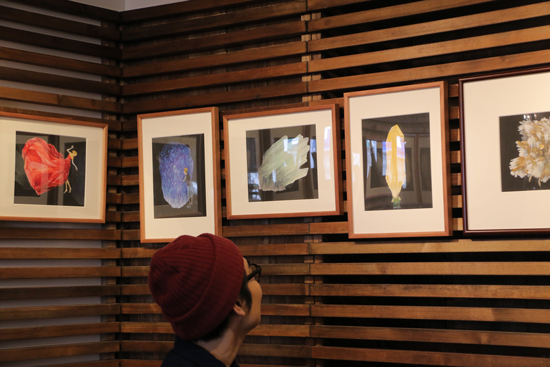
- Oh also, my watercolor paintings are most beautiful before the paint dries. That beauty is something only I can enjoy.
- —
- That’s true. All those intermediate steps before a picture is finished are only visible to the artist.
- junaida
- Of course, I also like it when the water evaporates and the paint dries on the paper. That’s beautiful too. But in the middle of painting when the wet watercolors glitter like jewels on the paper, I always get a thrill.
- —
- The secret joy of a watercolor painter.
- junaida
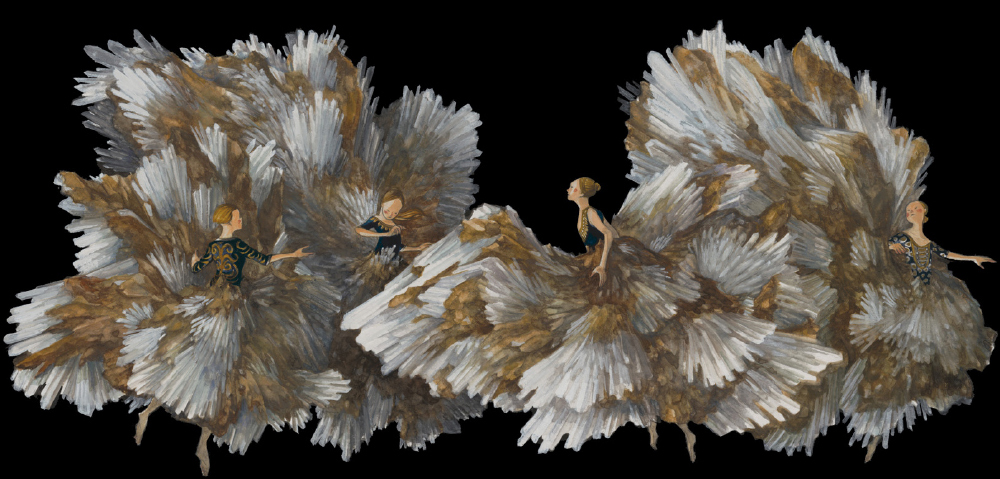
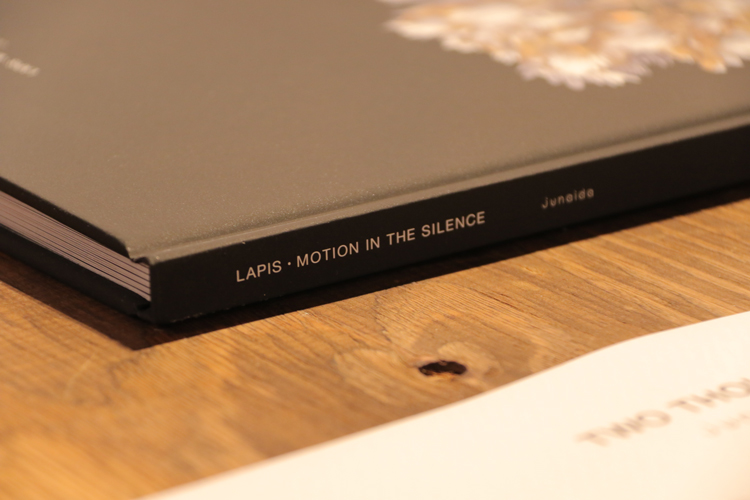
- And when I worked on my recent piece, LAPIS, it actually had a different feel than my other work.
- —
- What do you mean by that?
- junaida
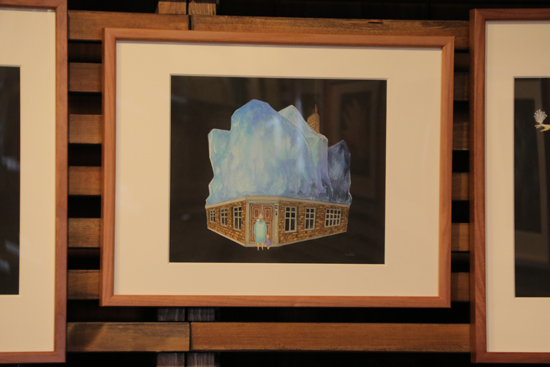
- I’ve always liked minerals, and if I see a pretty rock I’ll look at it from different angles and see different things in it—maybe from one angle it looks like a woman’s dress—or I’ll imagine how funny it would be if a tiny person were standing on it.
- —
- Yeah.
- junaida
- So I started drawing these mental images and realized it was forcing me to work muscles I had never used before.
- —
- It does have a totally different style from your previous work, which is bright and colorful.
- junaida
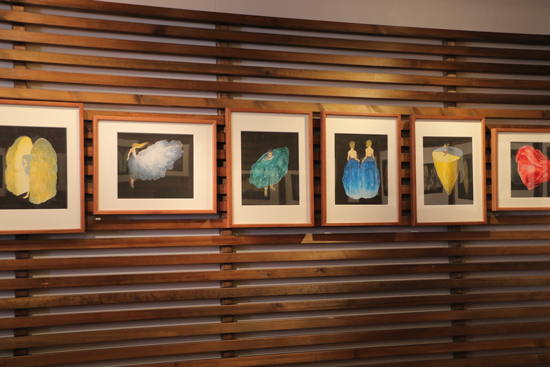
- It’s very picturesque this time. For example, in the past I’ve often drawn by making a triangle roof, then the walls, then the windows, and then coloring in between the lines.
- —
- Right.
- junaida
- But this time, all that exists are the contours of the person and the rock. Anything I need to express I have to express while coloring. I’d never done anything that way before, but it was intensely interesting.
- —
- So now the joy is in the act of drawing itself.
- junaida
- Exactly. Even I didn’t know how each picture would develop. I felt that thrill while I was drawing.
2016-12-06-Tue
BACK | Part 2Part 4 | NEXT